Monsoon Wedding Photography in Kolkata
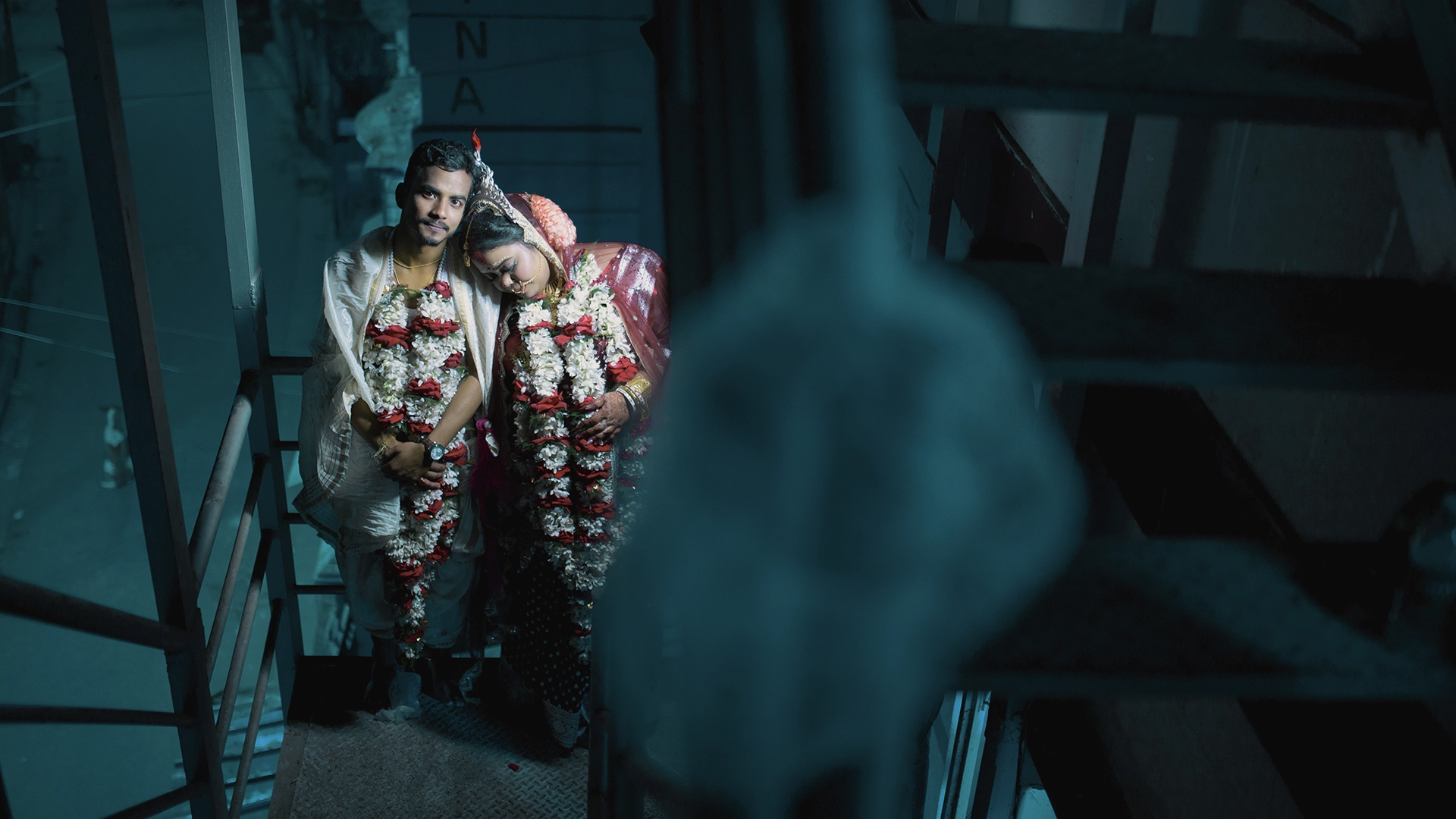
Monsoon is one of the best seasons for wedding photography in Kolkata — not a compromise. Rain produces softer light, richer colour, dramatic skies, and some of the most cinematic frames you'll ever get. The trade-off is logistical: you need covered venues, rain contingencies, and a photographer who has shot rainy weddings before.
Monsoon dates cost 20–30% less than winter, venues have more availability, and the photographs often look better than peak-season coverage. Book a venue with strong indoor architecture and a written rain plan.
- Monsoon light is softer and more flattering than harsh summer sun.
- Rain makes colours richer — wet surfaces reflect light and deepen contrast.
- Monsoon dates cost 20–30% less than winter in Kolkata.
- You need an indoor backup plan — not an outdoor venue with no alternative.
- Umbrella and rain-window portraits become signature frames.
- Gear protection is standard practice — not an emergency measure.
- Budget 30–60 minutes extra for weather-related delays.
- Ask your photographer for rainy-wedding experience before you book.
Table of Contents
- 1. The Short Answer
- 2. Why Monsoon Weddings Happen in Kolkata
- 3. The Kolkata Monsoon Reality
- 4. Why Rain Makes Better Photographs
- 5. The Lighting Advantage
- 6. Choosing a Rain-Friendly Venue
- 7. The Rain Contingency Plan
- 8. Gear Protection — What Professionals Do
- 9. The Umbrella Portrait
- 10. Rain-Window Shooting
- 11. Covered Outdoor Locations
- 12. Reflections and Puddles
- 13. Humidity, Makeup and Clothing
- 14. Colour Grading for Monsoon
- 15. Timeline Adjustments
- 16. Monsoon Wedding Cost Savings
- 17. Vendor Coordination in Rain
- 18. The Day-Before Checklist
- 19. Red Flags in Monsoon Photographers
- 20. A Final Reflection
Part One: The Short Answer
Is a monsoon wedding in Kolkata a good idea?
Yes — for many couples.
Monsoon dates cost 20 to 30 percent less than winter, venues are more available, and the photographs are frequently more striking than peak-season coverage. Rain produces soft, even light, rich colour saturation, dramatic cloud formations, and reflective surfaces that turn ordinary spaces into something cinematic.
The trade-off is straightforward: monsoon requires planning. You need a venue with strong indoor architecture, a written rain contingency, and a photographer who has shot rainy weddings before.
Do those three things, and monsoon becomes an advantage — not a risk.
Part Two: Why Monsoon Weddings Happen in Kolkata
Kolkata's traditional Bengali wedding season runs from November to February. Demand is intense. Venues are booked a year ahead. Photographers work two weddings a day.
By contrast, June to September is quiet. Monsoon rains arrive in mid-June and continue through September, sometimes into early October. The weather is unpredictable — a dry morning can turn into a torrential afternoon in twenty minutes.
And yet, monsoon weddings are growing in popularity. Why?
Three reasons.
1. Price. A wedding photographer charging ₹1.5 lakh in December often charges ₹1 lakh in August. Venues offer similar discounts.
2. Availability. Premium photographers who are fully booked for winter often have open dates during monsoon. Couples who want a specific studio sometimes shift their date to get them.
3. Better photographs. This is the one couples rarely anticipate, and the one that surprises them most. Rainy weddings produce photographs that look like cinema — moody, rich, and emotionally resonant.
Part Three: The Kolkata Monsoon Reality
Understanding the weather is the first step to planning well.
| Month | Rain Pattern | Photography Impact |
|---|---|---|
| Mid-June | Onset — sudden heavy showers | Unpredictable but dramatic skies |
| July | Peak rainfall, frequent storms | Maximum indoor reliance, best dramatic light |
| August | Heavy rain with dry spells between | Good balance of outdoor and indoor options |
| September | Decreasing rain, softer humidity | Best month for monsoon weddings |
| Early October | Withdrawal — occasional showers | Near-winter quality, still discounted rates |
Patterns vary year to year. Confirm the current forecast in the week before the wedding.
The single most useful fact: Kolkata monsoon rain typically comes in bursts, not continuous all-day downpours. A two-hour storm is followed by a two-hour dry window. Photographers who understand this rhythm can shoot outdoor portraits between rain bands.
Part Four: Why Rain Makes Better Photographs
This is the part most couples don't expect.
Rain doesn't just fail to ruin photographs. It actively improves them.
Here's why.
Wet surfaces reflect light. A wet marble floor, a rain-slicked terrace, a puddle on a courtyard — all become mirrors that add depth, symmetry, and visual richness to a frame. Reflections double the composition without any additional effort.
Colour becomes richer. Rain saturates surfaces. The green of a garden turns deeper. The red of a benarasi saree becomes more vivid. The gold of jewellery catches light differently. The overall palette intensifies.
Skies become dramatic. Kolkata monsoon skies are extraordinary — towering cumulus clouds, dark grey bands, sudden shafts of sunlight breaking through. These skies do in a portrait what no clear blue sky can.
Atmosphere softens everything. Mist, haze, and drizzle diffuse light naturally, reducing contrast in a way that flatters skin tones and adds a cinematic quality that can't be added in post-production.
Every wedding photographer has a folder of the best photographs they've ever taken. A disproportionate number of them were shot in rain.
This is not a coincidence. Rain transforms ordinary scenes into atmospheric ones — and atmospheric is what cinematic means.
Part Five: The Lighting Advantage
Kolkata summer weddings are shot in harsh light. Bright sun at 3 PM creates deep shadows, blown highlights, and squinting subjects. Photographers work hard to control it.
Monsoon light is the opposite.
Cloud cover acts as a giant softbox. It diffuses sunlight evenly across the whole scene, producing what photographers call "open shade" light — soft, flattering, and consistent across the frame.
This changes what's possible. You can shoot outdoors at 2 PM without worrying about harsh shadows. You can position subjects anywhere without directional light problems. Portraits taken in monsoon light often look like they were shot in a studio.
The main challenge is indoor banquet halls. Monsoon skies mean very little natural light enters through windows. Banquet halls with no daylight become fully reliant on flash and video lighting. This is where a photographer's experience shows — poorly lit banquet halls produce flat, yellow, unflattering images. Well-lit ones produce rich, warm, dramatic frames.
Ask your photographer: how do you light a windowless banquet hall? A specific answer tells you they've done this before.
Part Six: Choosing a Rain-Friendly Venue
The venue is your single biggest monsoon decision. Get this right and everything else follows.
| Venue Feature | Why It Matters |
|---|---|
| Covered courtyard or atrium | Lets you shoot outdoors while staying dry |
| Verandas, corridors, colonnades | Natural light without exposure to rain |
| Large windows or glass walls | Soft, diffused light even on rainy days |
| Marble or polished flooring | Creates reflections — a monsoon signature |
| Multiple indoor halls | Backup space if weather forces relocation |
| Covered entrance and portico | Essential for baraat arrival and guest photos |
| Dedicated indoor mandap space | Ceremony runs regardless of weather |
Venues to consider in Kolkata: ITC Royal Bengal (excellent indoor architecture and glass), JW Marriott (covered courtyard and corridors), The Oberoi Grand (heritage verandas), Taj Bengal (covered lobby and colonnade), and heritage properties like Raajkutir with covered courtyards.
Venues to think twice about: properties whose entire wedding offering is an outdoor lawn with no covered alternative. If the ceremony can only happen on grass, and rain is forecast, you have no plan B.
Part Seven: The Rain Contingency Plan
Every monsoon wedding needs a written rain plan. Not a verbal understanding. A written one.
- Primary ceremony location (outdoor) AND backup location (indoor) both booked
- Decision deadline for switching locations — usually 4 hours before the event
- Two covered portrait locations identified at the venue
- Covered space for baraat arrival and guest photographs
- Umbrellas on standby for the couple and the photographer
- Towels and plastic sheeting for wet equipment
- Dry space for the bride's outfit change and makeup touch-ups
- Photographer briefed on both plans in advance
- Vendor teams (catering, decor, sound) aware of backup plan
- Buffer of 30–60 minutes built into the timeline
The plan should be shared with every vendor. Not just the photographer. If the decor team doesn't know the mandap might move indoors, you'll have a crisis on the day.
Part Eight: Gear Protection — What Professionals Do
Rain doesn't have to damage equipment. Professionals plan for it.
Standard monsoon gear kit:
- Rain sleeves for camera and lens — neoprene covers that allow full camera operation while keeping water off
- Silica gel packs in the camera bag to absorb humidity
- Two camera bodies minimum — if one fails, the other continues
- Waterproof camera bag with a rain cover
- Microfibre cloths for constant lens wiping
- Dry box or sealed container for backup gear
- Plastic sheeting for setting gear down between shots
What photographers should never do: stand in direct rain with unprotected gear. A single direct exposure can kill a body. Cameras have weather sealing, but "weather-sealed" is not "waterproof."
- Photographer arrives without rain covers or waterproof bags
- Only one camera body for a monsoon wedding
- No plan for moving gear between covered locations
- "We'll figure it out on the day"
- Refuses to shoot outdoors even in light drizzle (over-cautious is also a problem)
Part Nine: The Umbrella Portrait
The umbrella portrait is the single most recognisable frame of a monsoon wedding. It works for one simple reason: it turns the weather from a problem into the picture.
What makes a good umbrella portrait:
- A clean, dark or black umbrella — not a busy pattern or transparent plastic
- Rain that is visible — light drizzle or visible drops read better than a heavy downpour
- A backdrop that responds to rain — greenery, wet pavement, a lit veranda behind
- Positioning close to shelter — the couple under the umbrella, the photographer under a doorway or canopy
- Natural expression — laughter and genuine engagement beat posed solemnity
One umbrella or two? One is better. It creates intimacy. Two umbrellas make the couple look like they're avoiding each other.
What about the outfit? Heavy benarasi sarees don't respond well to rain. Plan the umbrella portrait for a window when the rain is light, or shoot it in a covered space where the couple can be positioned under the umbrella for the composition without actually getting wet.
Part Ten: Rain-Window Shooting
Kolkata monsoon rain comes in bands. A heavy storm often lasts 45 minutes to two hours, followed by a dry window of similar length.
This rhythm is your opportunity.
A skilled photographer watches the sky and the radar. When the storm is approaching the end, they prepare the couple. When the rain stops — even for ten minutes — they shoot. Outdoor portraits, courtyard sessions, terrace photos.
What to plan for:
- Keep the couple ready to step outside at short notice
- Have a specific covered location prepared as a staging point
- Pre-visualise the shots so you can execute them fast
- Don't wait for perfect conditions — 10 minutes is enough
Most couples who book a monsoon wedding end up with at least one outdoor portrait session. It rarely rains continuously for the entire day.
Part Eleven: Covered Outdoor Locations
Covered outdoor spaces are the monsoon photographer's best friend. They provide natural light without exposure to rain.
What to look for at your venue:
- Verandas and colonnades — heritage properties like The Oberoi Grand have excellent examples
- Covered courtyards — Indian heritage architecture frequently includes these
- Temple-style arches and corridors — Raajkutir and similar properties
- Glass-walled lobbies — modern hotels with floor-to-ceiling windows
- Covered staircases — many older venues have photogenic internal stairwells
- Porticos and driveways — for arrival shots and baraat photography
Ask your photographer to visit the venue before the wedding and identify four or five covered locations. On the day, you can rotate through them without ever being exposed to rain.
Part Twelve: Reflections and Puddles
Reflections are the monsoon photographer's secret weapon.
A puddle on a marble floor, a wet terrace, a rain-slicked courtyard — all become surfaces that double your composition. The couple appears twice in the frame. The mandap reflects in the floor. Lights stretch across wet paving.
Where to find the best reflections:
- Polished marble floors in banquet halls and heritage properties
- Wet courtyard paving
- Puddles on terraces and driveways — even small ones work
- Wet car bonnets and windows for creative frames
- Reflections in jewellery, mirrors, and metal surfaces
The composition is simple: position the camera low to the ground, place the subject above the reflective surface, and let the reflection fill the lower half of the frame. The result looks deliberate and cinematic.
Part Thirteen: Humidity, Makeup and Clothing
Humidity is monsoon's most underrated challenge. It affects makeup, fabric, and comfort across a long wedding day.
For the bride:
- Ask your makeup artist for humidity-resistant formulas
- Plan two touch-up sessions — one mid-ceremony, one before reception
- Choose fabrics that hold up: heavier silks and benarasi do better than light chiffon
- Carry blotting paper, not powder — powder clumps in humidity
- Hairstyles with more structure hold better than loose styles
For the groom:
- Choose lighter sherwani fabrics if possible
- Carry a spare kurta for the reception in case of sweating
- Avoid heavy silk that shows moisture marks
For both:
- Have a cool, dry room available for breaks
- Keep cold water and electrolytes available
- Plan longer gaps between segments — you'll need them
Part Fourteen: Colour Grading for Monsoon
Monsoon photographs look best when colour grading respects the mood of the weather.
What good monsoon colour grading does:
- Enhances greens and blues without making them cartoonish
- Retains warmth in skin tones — critical because wet weather can produce cool, blue-ish images that make skin look wrong
- Keeps dark tones dark — monsoon shadows are rich, not muddy
- Avoids the "Instagram warm" preset look — monsoon calls for nuance, not drama
- Preserves the softness of cloud-diffused light rather than artificially boosting contrast
At Roy's Studio, we apply our Wedding Tone™ approach to monsoon weddings. The philosophy is that colour should serve memory, not just aesthetics. Monsoon photographs especially benefit from this — because a heavy-handed grade strips away the atmosphere that made the frame worth shooting in the first place.
Ask your photographer how they grade monsoon weddings.
A photographer who says "same as any other wedding" has not thought about how different monsoon light is. A photographer who says "I keep the greens and blues richer and protect skin warmth" has.
Part Fifteen: Timeline Adjustments
Monsoon adds time to a wedding day. Plan for it.
| Segment | Usual Time | Monsoon Buffer |
|---|---|---|
| Getting ready | 1.5–2 hrs | +15 min (humidity touch-ups) |
| Baraat arrival | 1–1.5 hrs | +15 min (covered entrance logistics) |
| Ceremony | 2–3 hrs | +15 min (indoor set-up if relocated) |
| Couple portraits | 1–1.5 hrs | +30 min (weather windows) |
| Family portraits | 0.5–1 hr | +15 min (moving between locations) |
| Reception | 3–4 hrs | +15 min (transition from ceremony) |
Buffers assume an indoor or covered venue. Outdoor-only weddings may need larger contingencies.
Total addition: roughly 30 to 90 minutes across the day. Book one extra hour of photography coverage if you're planning a monsoon wedding. It's the cheapest insurance you'll buy.
Part Sixteen: Monsoon Wedding Cost Savings
Monsoon prices in Kolkata are genuinely lower. Here's what to expect.
| Service | Peak (Nov–Feb) | Monsoon (Jul–Sep) | Savings |
|---|---|---|---|
| Wedding photography (mid-range) | ₹90,000 | ₹65,000 | ~28% |
| Wedding photography (premium) | ₹2,00,000 | ₹1,50,000 | ~25% |
| Venue rental | ₹4,50,000 | ₹3,20,000 | ~30% |
| Decor | ₹3,00,000 | ₹2,40,000 | ~20% |
| Catering per plate | ₹1,800 | ₹1,500 | ~17% |
Indicative ranges. Actual quotes vary by venue, vendor, and specific date.
The savings compound. A wedding that would cost ₹18 lakh in December often costs ₹12–13 lakh in August. If you have flexibility on dates and want a premium photographer or a high-end venue, monsoon is the practical way to afford them.
Part Seventeen: Vendor Coordination in Rain
Photography doesn't work in isolation. Every vendor needs to know the rain plan.
Decor team. If the mandap might move indoors, they need advance notice to prepare both setups. Confirm they can convert quickly.
Catering. Rain changes service flow. Covered buffet stations, protected pathways for guests, and indoor dining seating all need to be planned.
Sound and lighting. Outdoor speakers and lights need covers. Backup power for indoor relocation should be arranged.
Makeup team. Extra touch-up time between segments. Humidity-resistant formulas.
Venue coordinator. Single point of contact for weather decisions. Everyone should know who makes the call on relocating indoors.
Photographer. Briefed on both plans. Has scouted the venue. Has rain gear prepared.
On the day, communication is everything. A monsoon wedding with poor coordination looks chaotic in the photographs. A monsoon wedding with good coordination looks effortlessly smooth.
Part Eighteen: The Day-Before Checklist
- Check the current weather forecast for the venue location
- Confirm the covered portrait locations with the photographer
- Confirm the rain contingency decision deadline with the coordinator
- Confirm umbrellas are available — at least four (couple, photographer, guests)
- Confirm the makeup team has humidity-resistant products
- Confirm the couple's outfit changes work for a potentially damp day
- Confirm backup power for indoor relocation
- Confirm the catering has protected pathways for guests
- Prepare the family coordination plan — where do relatives wait if it rains
- Brief the couple: the photographs will be beautiful. Trust the plan.
Part Nineteen: Red Flags in Monsoon Photographers
- Has never shot a rainy wedding
- Arrives without rain covers or waterproof bags
- Refuses to shoot any outdoor portraits at all — even in light drizzle
- Has only one camera body
- Cannot describe how they would light a windowless banquet hall
- Has no scouting plan for the venue before the wedding
- Says "we'll figure it out on the day"
- Has no written rain contingency in the contract
- Charges a monsoon discount but delivers winter-quality service
Part Twenty: A Final Reflection
I've photographed monsoon weddings across Kolkata for over a decade. Some of the most memorable photographs I've taken were made during rain.
A bride laughing under an umbrella at the entrance of a Ballygunge villa. A groom's brother splashing through a puddle while the baraat waited. The bride's mother watching from a covered veranda, silhouetted against the rain. A couple's first look in the corridor of an ITC property while a storm raged outside the glass.
None of these would have existed in a winter wedding. They exist because of the weather, not despite it.
Monsoon weddings are not for every couple. They require flexibility, a good plan, and a photographer who knows what they're doing. But for couples who love atmosphere, who value photographs that feel like cinema, and who want to get married in a season that produces the most beautiful light in Kolkata — monsoon is a hidden advantage.
If you're planning a monsoon wedding, ask your photographer three questions:
1. How many rainy weddings have you shot?
2. Show me your favourite photographs from a rainy wedding.
3. What's your rain plan for my venue?
If they answer those three questions with confidence, you're in good hands. If they hesitate, keep looking.
That's what we do at Roy's Studio. We plan monsoon weddings like we plan any other — with preparation, and with excitement about what the weather will give us.
Frequently Asked Questions
Is it worth having a wedding in Kolkata during monsoon?
Yes, for many couples. Monsoon weddings in Kolkata are 20 to 30 percent cheaper than peak winter dates, venues have more availability, and photographers are less rushed. The photographs are often more dramatic than summer or winter weddings because of the moody light, wet reflections, and rich colour. The trade-off is logistical — you need rain contingencies and an indoor backup plan.
What happens if it rains on my wedding day?
A professional photographer plans for rain from the beginning. The coverage shifts to covered spaces — mandap under canopy, banquet hall interiors, verandas, corridors, and covered balconies. Rain itself becomes an asset: umbrella portraits, reflections in puddles, and window light create some of the most memorable frames of a monsoon wedding. The key is a photographer who has shot rainy weddings before and knows what to do without panicking.
How much does monsoon wedding photography cost in Kolkata?
Monsoon wedding photography in Kolkata typically costs 20 to 30 percent less than winter dates. Mid-range packages for July to October usually range from ₹60,000 to ₹95,000, and premium full-day coverage from ₹1,10,000 to ₹2,00,000. Because demand is lower, some premium studios that are fully booked in winter have availability in monsoon.
Which venues in Kolkata are best for monsoon weddings?
The best monsoon venues are ones with strong indoor architecture, covered courtyards, and multiple backup spaces. ITC Royal Bengal, JW Marriott, The Oberoi Grand, and Taj Bengal all have excellent indoor options. Heritage properties like Rajbari and Raajkutir offer covered courtyards. Avoid venues that depend heavily on outdoor lawns with no covered alternative.
Does rain damage photography equipment?
Not if the photographer is prepared. Professional wedding photographers carry rain covers, silica gel packs, and backup bodies. Camera bodies and lenses are weather-sealed on professional models, but no equipment survives a direct soaking. Good monsoon practice means shooting from under cover, using rain sleeves, and keeping backup gear in a dry case. If a photographer has no rain plan, that is a red flag.
Can we still get outdoor portraits during a monsoon wedding?
Yes. Outdoor portraits in monsoon are possible in three ways. First, covered outdoor spaces — verandas, colonnades, temple arches, and building entrances. Second, brief rain-window shoots — a 10-minute gap in rainfall is often enough. Third, deliberate rain portraits — an umbrella or a shared shawl in light rain produces some of the most cinematic frames of a monsoon wedding.
How do monsoon weddings affect the photography timeline?
Monsoon usually adds 30 to 60 minutes to the day because the photographer needs extra time to move between covered locations, dry gear, and adapt the plan when the weather shifts. Weddings with outdoor ceremonies should budget an hour of buffer. Indoor ceremonies are barely affected. It helps to have a rain contingency plan written into the timeline before the wedding day.
Is a monsoon wedding photograph darker or less colourful?
No. Monsoon light is softer and more diffuse than summer sunlight, which flatters skin tones and produces even lighting without harsh shadows. Colours become richer because wet surfaces reflect light. Skies are dramatic. The main challenge is low indoor light in banquet halls, which is solved with proper flash technique and colour grading — not by avoiding monsoon dates.

Planning a monsoon wedding in Kolkata?
We'll send you our rain-planning guide and two complete monsoon galleries.
Request Monsoon Galleries