How Many Hours of Wedding Photography Do You Actually Need?
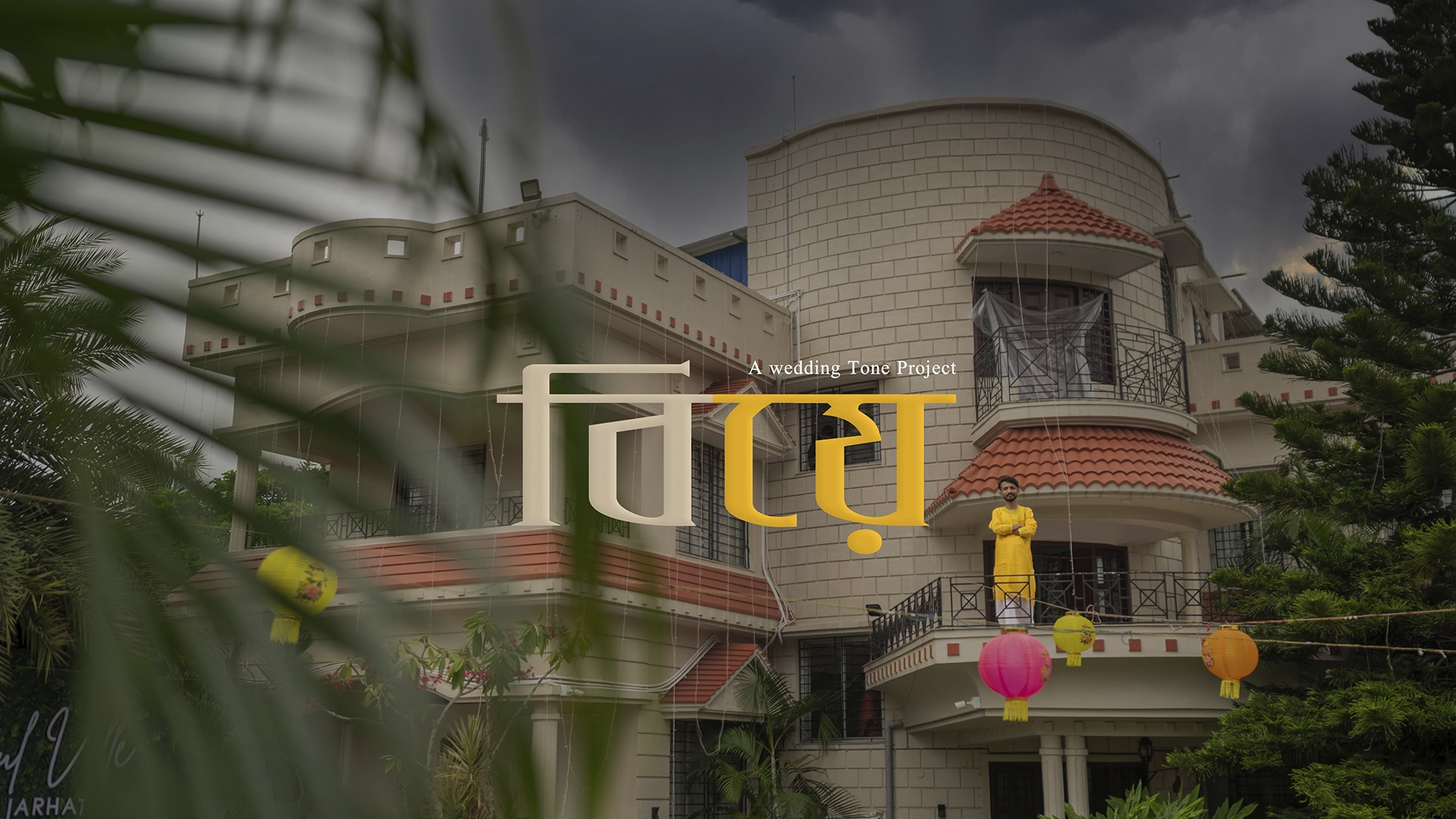
Most weddings need 8–12 hours of photography coverage on the main day. A full Bengali wedding day — haldi, baraat, ceremony and reception — typically needs 12–16 hours. Intimate weddings and court marriages need 4–6 hours. Multi-day celebrations combining Gaye Holud, the wedding and a reception usually total 20–30 hours across all events.
The right number isn't the maximum your photographer offers. It's the number that covers your rituals from first frame to last, plus one hour of buffer.
- 8–12 hours covers a standard single-day wedding.
- 12–16 hours covers a full Bengali wedding day with ceremony and reception.
- Second photographer beats extra hours — simultaneous moments can't be shot by one person.
- Always book 1 hour of buffer beyond your expected end time.
- Coverage until the last guest leaves is usually wasted money.
- Ask whether travel and setup count toward your hours — in Kolkata this can add 1–2 hours.
Table of Contents
- 1. The Short Answer
- 2. Coverage Tiers by Wedding Type
- 3. The Hour-by-Hour Bengali Wedding Day
- 4. The Buffer Hour Nobody Books
- 5. What Actually Eats Your Hours
- 6. What Doesn't Need Hours
- 7. Two Photographers vs More Hours
- 8. Photo and Video Hours Together
- 9. Multi-Day Weddings
- 10. Destination Weddings
- 11. Do You Need the Reception Covered?
- 12. Getting-Ready Coverage: Worth It?
- 13. Should You Stay Until the Last Guest Leaves?
- 14. Overtime Clauses and Hourly Rates
- 15. The Cost-Per-Hour Trap
- 16. The Decision Framework
- 17. Two Sample Kolkata Timelines
- 18. Questions to Ask Your Photographer
- 19. The Kolkata Reality Check
- 20. A Final Reflection
Part One: The Short Answer, Stated Plainly
How many hours of wedding photography do you actually need?
Between 8 and 12 hours for most weddings. Between 12 and 16 for a full Bengali wedding day. Between 4 and 6 for an intimate or registered marriage.
That's the answer most couples are looking for. It's also the answer most photographers won't give you directly, because hours are how packages are priced and priced up.
So let's be direct: the number of hours you need is not a matter of taste. It's arithmetic.
You have a set of events. Each event has a realistic duration. Add them together. Add one hour of buffer. That is your number.
Everything else — "premium," "luxury," "full-day" — is packaging language layered on top of that arithmetic.
Part Two: Coverage Tiers by Wedding Type
Here's the baseline. Find your wedding type, and you have your starting number.
| Wedding Type | Hours Needed | Photographers |
|---|---|---|
| Court / registered marriage | 3–4 hours | 1 |
| Intimate wedding (under 50 guests) | 5–6 hours | 1 |
| Single ceremony + short reception | 8–10 hours | 1–2 |
| Full wedding day (ceremony + reception) | 12–14 hours | 2 |
| Full Bengali wedding day (haldi → baraat → ceremony → reception) | 14–16 hours | 2 |
| Multi-day (Gaye Holud + wedding + reception) | 20–30 hours total | 2 |
| Destination wedding (3 days) | 25–35 hours total | 2 |
These are coverage hours — first frame to last. They do not include travel, setup or breaks unless your contract says otherwise.
Notice that the numbers jump significantly once a reception is added. That's because receptions are long, and because the gap between ceremony and reception is dead time nobody wants to pay for.
Part Three: The Hour-by-Hour Bengali Wedding Day
Here is where the hours actually go on a typical Kolkata wedding day.
| Segment | Typical Duration | What It Covers |
|---|---|---|
| Getting ready / bridal portraits | 1.5–2 hrs | Makeup, shankha pola, jewellery, details, quiet moments |
| Groom's baraat arrival | 1–1.5 hrs | Dhol, family dancing, topor, entry |
| Pre-ceremony / welcome | 0.5 hr | Subho Drishti setup, guest arrivals, elder blessings |
| Main ceremony | 2–3 hrs | Saat Paak, Sindoor Daan, Kanyadaan, mala bodol |
| Couple portraits | 1–1.5 hrs | Directed portraits in good light, both indoor and outdoor |
| Family portraits | 0.5–1 hr | Grouped shots by side, generation, and neighbourhood |
| Reception / dinner | 3–4 hrs | Entrance, cake, first dance, toasts, guest interaction |
Add those up: roughly 10 to 13.5 hours of pure shooting. Add travel between the bridal suite, the ceremony venue and the reception hall, and you're comfortably at 12–16 hours for the day.
This is why "8 hours" rarely works for a full Bengali wedding. Eight hours gets you either the ceremony or the reception — not both with room to breathe.
"A couple booked eight hours for a South Kolkata wedding. The ceremony ran 90 minutes late because the baraat got stuck in traffic on the EM Bypass. By the time the reception started, coverage had ended. They have a beautiful ceremony album and no reception photographs at all. The one hour of buffer they didn't book would have cost less than the overtime they couldn't get."
Part Four: The Buffer Hour Nobody Books
Indian weddings do not run on time. This is not a criticism — it's a planning fact.
Book one hour of buffer beyond your expected end time. Every time.
Here's why. Photographers bill overtime at an hourly rate that is almost always higher than the effective per-hour rate of your package. If your package works out to roughly ₹X per hour, overtime might be 1.5X or 2X. Booking that hour upfront is cheaper.
More importantly, when coverage ends mid-event, the photographer leaves. They don't stay out of goodwill. You lose the end of your wedding — which, more often than not, is when the most unguarded moments happen.
One buffer hour is the cheapest insurance in wedding planning.
Part Five: What Actually Eats Your Hours
Not all hours are equal. Some things consume time without producing photographs worth keeping.
1. Travel between venues
Bridal suite in Ballygunge, ceremony in Bhowanipore, reception in Rajarhat. That's two hours in the car. Ask specifically whether travel counts toward your hours.
2. Guest arrival gaps
The stretch between the ceremony ending and the reception beginning is often 60–90 minutes of nothing. Sometimes it's worth covering. Often it isn't.
3. Extended family portrait sessions
Bengali families are large. If you have 200 guests and everyone wants a group photo, family portraits can run to two hours. Plan for it, or appoint a family coordinator to organise groups in advance.
4. Delayed rituals
The priest is late. The groom's party is late. The makeup artist is late. Every delay pushes your end time later and eats your buffer.
5. Meal breaks
Photographers need to eat. If your contract specifies a break, and the break falls during an important moment, that's a problem. Most professionals eat while working, but clarify this upfront.
Part Six: What Doesn't Need Hours
Here's where you can save.
Dead time between events. If there's a three-hour gap between the ceremony and the reception, don't pay for it. Ask for split coverage or a reduced rate during the gap.
The last two hours of the reception. Once the cake is cut and the first dance is done, the remaining hours are mostly dance-floor repetition. One hundred near-identical frames that rarely make the album.
Guest arrival footage. Unless your guests are flying in from abroad and the arrival itself is an event, half an hour of arrivals is plenty.
Redundant coverage of the same rituals. If you have two photographers, one can cover the bride's side while the other covers the groom's. That's simultaneous coverage — not extra hours.
Part Seven: Two Photographers vs More Hours
If your budget allows only one upgrade, which should it be?
A second photographer, almost always.
Here's the reasoning. During the Sindoor Daan, the bride's mother is crying in one corner and the groom's father is laughing in another. One photographer can capture one of those. Two photographers can capture both.
Extra hours, by contrast, only help if your events genuinely run longer than your coverage window. They don't help you capture more of what's happening at any given moment.
A useful rule: Buy hours for duration. Buy photographers for coverage.
For a full Bengali wedding day, two photographers is close to essential. For an intimate gathering, one is fine.
Part Eight: Photo and Video Hours Together
If you're booking both photo and video, hours get more complicated.
Photo and video do not need the same number of hours. Video takes longer to set up for each shot, and video teams usually want more time for the couple's cinematic sequences.
A common structure:
- Photography: 12 hours
- Videography: 10 hours, arriving later and leaving earlier
But be careful. If the photo and video teams arrive and leave at different times, you may end up with photographs of the getting-ready session and video footage that starts at the ceremony. That's usually fine — but decide deliberately, not by accident.
Also ask whether the photo and video teams are from the same studio and whether they coordinate. A photo team and a video team that have never worked together will spend the first hour getting in each other's way.
Part Nine: Multi-Day Weddings
Bengali weddings are frequently multi-day. Here's how the hours stack up.
| Event | Typical Hours |
|---|---|
| Gaye Holud (either side) | 4–6 hrs each |
| Mehendi / Sangeet | 4–5 hrs |
| Wedding day (haldi → ceremony) | 10–14 hrs |
| Reception (separate day) | 4–6 hrs |
| Bou Bhaat / farewell | 2–3 hrs |
Multi-day bookings are usually discounted compared to booking each day separately. Ask for a combined rate.
If you're booking four events across three days, you're looking at roughly 20–30 hours of coverage. Most studios will quote this as a multi-day package rather than an hourly total — but you should still ask for the hours in writing so you know what you're getting.
Part Ten: Destination Weddings
Destination weddings change the arithmetic because the photographer travels with you.
A three-day destination wedding typically needs 25–35 hours of total coverage.
- Day 1 — Welcome event: 6–8 hours
- Day 2 — Main wedding day: 12–16 hours
- Day 3 — Farewell brunch: 6–10 hours
Destination packages usually include travel, accommodation and a per-day rate rather than hourly billing. The key question to ask: Is the photographer working exclusively for us for the entire duration, or are they shooting other events on the side?
Part Eleven: Do You Need the Reception Covered?
Yes — but not all of it.
Three to four hours of reception coverage is the sweet spot.
The moments that matter at a reception:
- The couple's entrance
- Cake cutting
- First dance
- Speeches and toasts
- Guest interaction and family groups
- The farewell / bidaai
All of that fits comfortably into three to four hours. Beyond that, you're paying for dance-floor repetition.
Exception: If your reception has a structured programme — performances, a sangeet segment, a grand finale — extend to five hours. Just be honest with yourself about whether the extra hour will produce images you'll actually look at in five years.
Part Twelve: Getting-Ready Coverage — Worth It?
Yes, and it's usually the most underrated part of the day.
1.5 to 2 hours of getting-ready coverage gives you:
- The shankha pola being placed
- Your mother adjusting your saree
- Your friends laughing in the corner
- The quiet moment before you see yourself in the mirror
- Detail shots — jewellery, invitations, the benarasi fabric
These are the photographs that carry the most emotional weight later. The ceremony is formal and public. The getting-ready hours are private and unrepeatable.
If you're cutting hours to save money, cut reception hours before you cut getting-ready hours.
Part Thirteen: Should You Stay Until the Last Guest Leaves?
No. Almost never.
Here's what happens in the final two hours of a reception. Guests dance. The same fifty people appear in two hundred nearly identical frames. The lighting is bad. Everyone looks tired. And when the album is designed, none of those photographs make it in.
End coverage 30 to 60 minutes after your final planned moment. That gives you the farewell, the last dance, and a handful of candid guest shots — and then you stop.
If you want one or two late-night photographs with your closest friends, ask the photographer to capture those before they wrap. Ten minutes is enough.
Part Fourteen: Overtime Clauses and Hourly Rates
Before you sign, get these four things in writing:
- The overtime rate. How much per additional hour? Is it the same for the second photographer?
- How overtime is billed. Per hour, or per half-hour? Is there a minimum?
- Whether travel counts. Does the clock start when they leave the studio or when they take the first frame?
- What happens if the event is cancelled or postponed. Is the booking fee refundable? Transferable?
A photographer who won't put overtime in writing is telling you something. Take it seriously.
Part Fifteen: The Cost-Per-Hour Trap
Comparing photographers by cost per hour is tempting. It's also misleading.
Consider two photographers:
- Photographer A: ₹80,000 for 12 hours — ₹6,667 per hour
- Photographer B: ₹80,000 for 8 hours — ₹10,000 per hour
Photographer B looks 50% more expensive. But if Photographer B is twice as good at anticipating moments, directing families efficiently, and delivering an album you'll love for thirty years, Photographer B is the better value.
You are not buying hours. You are buying the ability to make the right decision at the right moment, hundreds of times across a day. Hours are just the container.
The right comparison is not cost per hour. It's: which photographer will produce the album I want to look at in thirty years?
Part Sixteen: The Decision Framework
Here's how to decide in five steps.
Step 1 — List every event you want covered. Not the ones you think you should want. The ones you actually want.
Step 2 — Estimate realistic durations. Ask your venue, your priest, and your family. Not your optimism.
Step 3 — Add one hour of buffer. Always.
Step 4 — Decide whether you need one or two photographers. Two for a full wedding day. One for anything intimate.
Step 5 — Ask what happens between events. Can you pause coverage during dead time? Most photographers will say yes if you ask upfront.
If your total exceeds your budget, cut in this order:
- Late reception hours
- Dead time between events
- Guest arrival coverage
- Second photographer (only if the wedding is genuinely small)
- Getting-ready coverage — last resort
Part Seventeen: Two Sample Kolkata Timelines
Sample A — Single-Day Wedding, 12 Hours
- 2:00 PM — Arrive at bridal suite, getting-ready coverage begins
- 4:00 PM — Baraat arrival coverage
- 5:30 PM — Pre-ceremony and guest arrivals
- 6:00 PM — Main ceremony
- 8:30 PM — Couple portraits
- 9:30 PM — Family portraits
- 10:30 PM — Reception entrance, cake, first dance
- 1:00 AM — Buffer hour in play
- 2:00 AM — Coverage ends
Sample B — Intimate Wedding, 6 Hours
- 4:00 PM — Arrival, getting-ready details
- 5:00 PM — First look / couple portraits
- 6:00 PM — Ceremony
- 7:30 PM — Family portraits
- 8:30 PM — Dinner and toasts
- 10:00 PM — Coverage ends
Notice how much of Sample A is not shooting. Travel, transitions, and waiting. That's why the hour count is higher than the sum of the events.
Part Eighteen: Questions to Ask Your Photographer
Ask these ten questions before you book. The answers will tell you more than any package brochure.
1. Do travel and setup count toward my hours?
Get a specific answer. "It depends" is not an answer.
2. What is your overtime rate, and is it in writing?
Ask for the number, not the policy.
3. Can we pause coverage between events?
This can save you thousands on a wedding with a long gap.
4. How many photographers will be present?
And will the second shooter be the same person whose work I saw in the portfolio?
5. How do you decide when to direct and when to observe?
This reveals whether they understand the difference between candid and cinematic.
6. Can I see a complete wedding gallery — not just highlights?
Highlights hide weaknesses. Complete galleries reveal them.
7. How many images will I receive, and how long until delivery?
Ask for the delivery timeline in writing. Ask what happens if it slips.
8. What is your experience with Bengali weddings?
Do they understand Sindoor Daan, Saat Paak, Subho Drishti, and the family dynamics around them?
9. What is your backup plan?
Equipment failure, illness, weather, venue changes. Who is the emergency replacement photographer?
10. How much of my wedding will you actually shoot personally?
Some studios send associates. Make sure you know who is holding the camera.
Part Nineteen: The Kolkata Reality Check
Kolkata weddings have a few specific realities that affect hour counts.
Traffic is real. Getting from a bridal suite in Ballygunge to a venue in Rajarhat can take 90 minutes. If your photographer is driving between venues, that time has to come from somewhere.
Rituals run long. Bengali ceremonies are rich and layered. Sindoor Daan alone can run 45 minutes. Saat Paak involves seven circuits with family participation. Plan for the ceremony to take longer than you expect.
Families are large and involved. This is a wonderful thing, and it means family portraits take real time. Appoint a coordinator who knows both sides of the family and can assemble groups quickly.
Winter wedding season is compressed. Between November and February, the best photographers are booked early and often working two events a day. If you're booking a winter wedding with 12+ hours of coverage, book six to nine months ahead.
Evening ceremonies push late. If your ceremony starts at 8 PM, the reception won't end at midnight. It will end at 2 AM. Book accordingly.
Part Twenty: A Final Reflection
I've photographed weddings for over a decade. In that time, I've never once heard a couple say: "I wish we had booked fewer hours."
I have heard, many times: "I wish we had booked one more hour."
But I've also seen couples pay for four hours they never looked at. Hours spent on a dance floor after everyone had stopped dancing. Hours spent on guests arriving who were photographed perfectly well at the ceremony.
The right number of hours is the number that covers your rituals completely, with one hour of buffer, and not one hour more.
Not the maximum. Not the minimum. The accurate number.
So when a couple asks me how many hours they need, I don't quote a package. I ask them to send me their timeline. Then I do the arithmetic with them.
Because the question isn't "how many hours can I afford?" It's "which hours will I actually want to remember?"
That's what we do at Roy's Studio. We plan the coverage around your rituals — not around a package tier.
Frequently Asked Questions
How many hours of wedding photography do I actually need?
Most weddings need 8 to 12 hours of photography coverage on the main day. A full Bengali wedding day including haldi, baraat, the ceremony and the reception typically needs 12 to 16 hours. Intimate weddings and court marriages need 4 to 6 hours. Multi-day celebrations combining Gaye Holud, the wedding and a reception usually total 20 to 30 hours across all events.
Is 8 hours of wedding photography enough?
Eight hours is enough for a single-event wedding with one ceremony and a short reception. It is usually not enough if you want getting-ready coverage, a baraat, a full Bengali ceremony and a reception on the same day. Eight hours typically covers either the ceremony and portraits, or the reception — not both comfortably.
How many hours do I need for a full Bengali wedding day?
A full Bengali wedding day usually needs 12 to 16 hours of coverage. The breakdown is roughly: 1.5 to 2 hours for getting ready and bridal portraits, 1 to 1.5 hours for the groom's baraat, 2 to 3 hours for the main ceremony including Sindoor Daan and Saat Paak, 1 to 1.5 hours for couple portraits, 0.5 to 1 hour for family portraits, and 3 to 4 hours for the reception.
Do I need two photographers or more hours?
If you must choose, a second photographer usually adds more value than extra hours. A second shooter captures simultaneous moments — the bride getting ready while the groom's baraat arrives — that a single photographer physically cannot cover. Extra hours only help if your events genuinely run longer than your coverage window.
Should I book photography until the last guest leaves?
No. Coverage until the last guest leaves usually produces hundreds of near-identical dance-floor frames that rarely make the final album. Most couples get better value ending coverage 30 to 60 minutes after the main reception moments — cake cutting, first dance, and the farewell — rather than staying until the venue empties.
Do hours include travel and setup time?
Usually not. Most professional photographers count coverage hours from the first frame to the last, not including travel between venues, setup, or breaks. Always ask whether travel between the bridal suite, the ceremony venue and the reception hall counts toward your booked hours — this can add 1 to 2 hours in Kolkata traffic.
What happens if my wedding runs longer than the booked hours?
Most photographers charge overtime at an hourly rate, often higher than the effective hourly rate of your package. Ask for the overtime rate in writing before you sign. A good rule is to book one hour of buffer beyond your expected end time, which is usually cheaper than paying emergency overtime.
How many hours of photography does a destination wedding need?
A three-day destination wedding typically needs 25 to 35 hours of total coverage: roughly 6 to 8 hours for the welcome event, 12 to 16 hours for the main wedding day, and 6 to 10 hours for the farewell brunch. Most destination packages are quoted as full-day or multi-day coverage rather than by the hour.

Not sure how many hours your wedding needs?
Send us your timeline. We'll do the arithmetic with you — no obligation.
Book a Consultation